The Event Production Process at Large Venues Like the O2 Arena
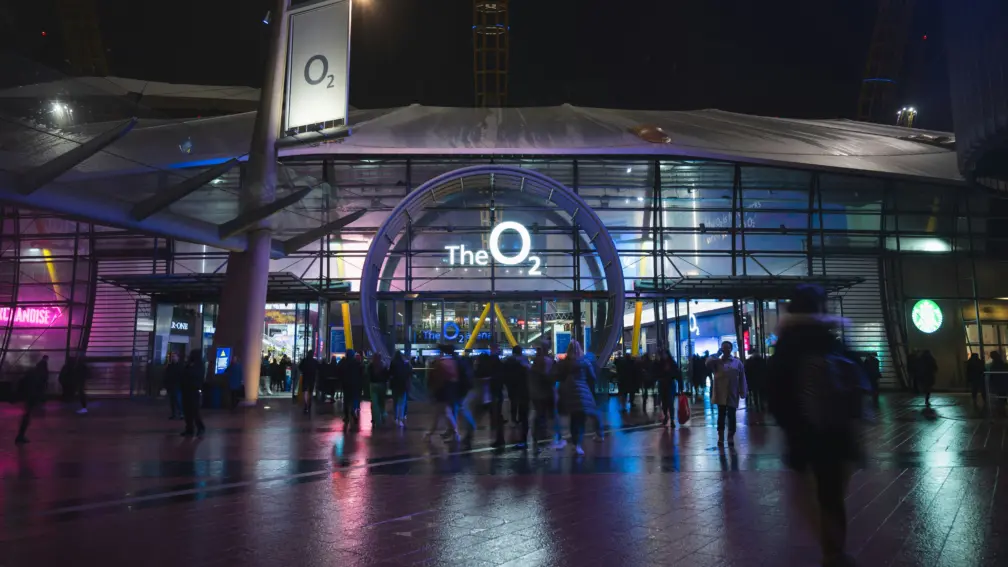
Large indoor venues like The O2 Arena are different from standard event spaces due to their scale, complexity, and the number of moving parts involved. As purpose built event venues, they’re designed specifically to handle large scale productions, but that doesn’t make the process simple. Planning and coordination are everything when it comes to ensuring events at venues like this run smoothly from start to finish.
Client Brief and Planning
Planning is an essential part of event production. It helps reduce wasted time and avoids mistakes further down the line. The first step is understanding the event type - whether it’s a concert, corporate event, awards ceremony, or something else entirely. From there, relevant teams translate the creative vision into practical production requirements. Early involvement from production managers, technical teams, and crew leads ensures everything is planned efficiently and, importantly, that what is being proposed is actually achievable in the venue. Experienced event crew who are familiar with the venue can also provide valuable insight at this stage, highlighting site rules and operational constraints that need to be factored into the planning process from the start.
Site Surveys and Technical Planning
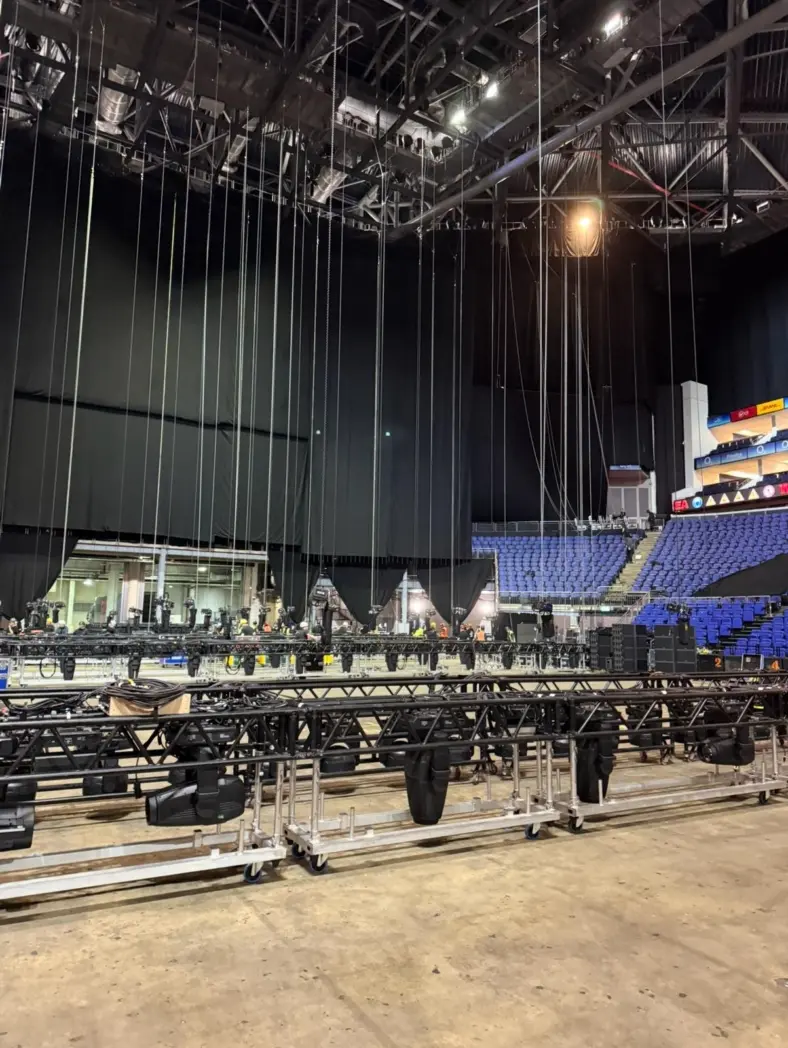
It is important for all relevant teams to carry out a pre-event venue walkthrough to fully understand the space and visualise how everything will be set up and where it will go. Often, event crew will have worked in the venue before, which is a huge advantage as having prior site knowledge helps speed up decision making and planning. During the visit, a senior crew member or production lead will typically identify key operational elements such as rigging points, load-in routes, power access, and staging areas. This ensures the build is planned in a practical and efficient way from the outset. One of the most important parts of this stage is conducting risk assessments and health & safety planning. These are paramount to ensuring the safety of everyone involved at every stage of the event production and execution. Coordination with any onsite venue teams is also essential at this point to ensure all requirements, restrictions, and procedures are fully understood and factored into the planning process.
Crew Allocation and Specialist Roles
At this point, the crew requirements are broken down identifying what types of crew are needed and when. This typically includes general crew, technical crew, plant operators, and any other specialist roles required for the production. The crewing supplier will then schedule shifts and manage labour flow across the build, live event, and breakdown phases. This ensures the right people are in the right place at the right time, keeping the production running efficiently. On large scale sites, it is essential to schedule experienced crew chiefs who are confident in managing larger teams and working alongside multiple collaborators. Strong leadership on the ground helps maintain structure and communication throughout the event. At this level, training and certifications also play a key role, ensuring all crew are qualified to operate safely and competently within a high pressure, large venue environment.
Build Phase
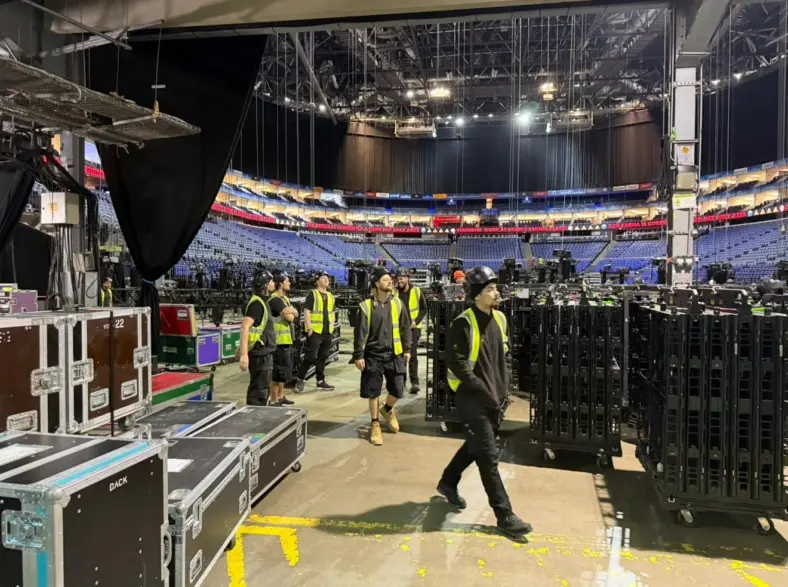
Once everything has been planned and organised down to the last detail, the load-in process begins, often working to tight venue schedules. During this phase, staging, lighting, sound, set builds, rigging, and dressing are all installed by the crew within the venue. It’s a highly coordinated process that relies on precise timing and efficiency across all departments. Constant and clear communication between teams is essential to ensure everything runs according to plan. It also enables quicker support from other departments if issues arise, allowing the production to adapt efficiently to any last minute changes without disrupting the overall schedule.
Technical Integration and Rehearsal
As any performer knows, a rehearsal is essential before a performance. However, what is sometimes overlooked is that rehearsals are just as important for the crew and wider event teams as they are for the performers. Sound checks, lighting programming, and AV testing are carried out prior to the event to ensure everything runs smoothly once the show goes live. Strong integration between creative teams and technical operators helps ensure that everything looks and functions exactly as intended. Full run throughs and cue to cue rehearsals further confirm that all elements are working correctly and that timing is precise before going live. Final safety checks are then completed before doors open, ensuring that the venue is fully safe and ready for both audiences and performers.
Show Operation
The show itself is the most high pressure part of any event. It requires excellent real time crew coordination behind the scenes, alongside precise stage management and cue execution. Problem solving under pressure is often necessary, as live environments can be unpredictable and changes may need to be made quickly without disrupting the show, attendees or performers. Maintaining safety and smooth flow management throughout the live event is also critical, ensuring that both performers and audiences are kept safe while the production runs on course from start to finish.
Breakdown and Load-Out
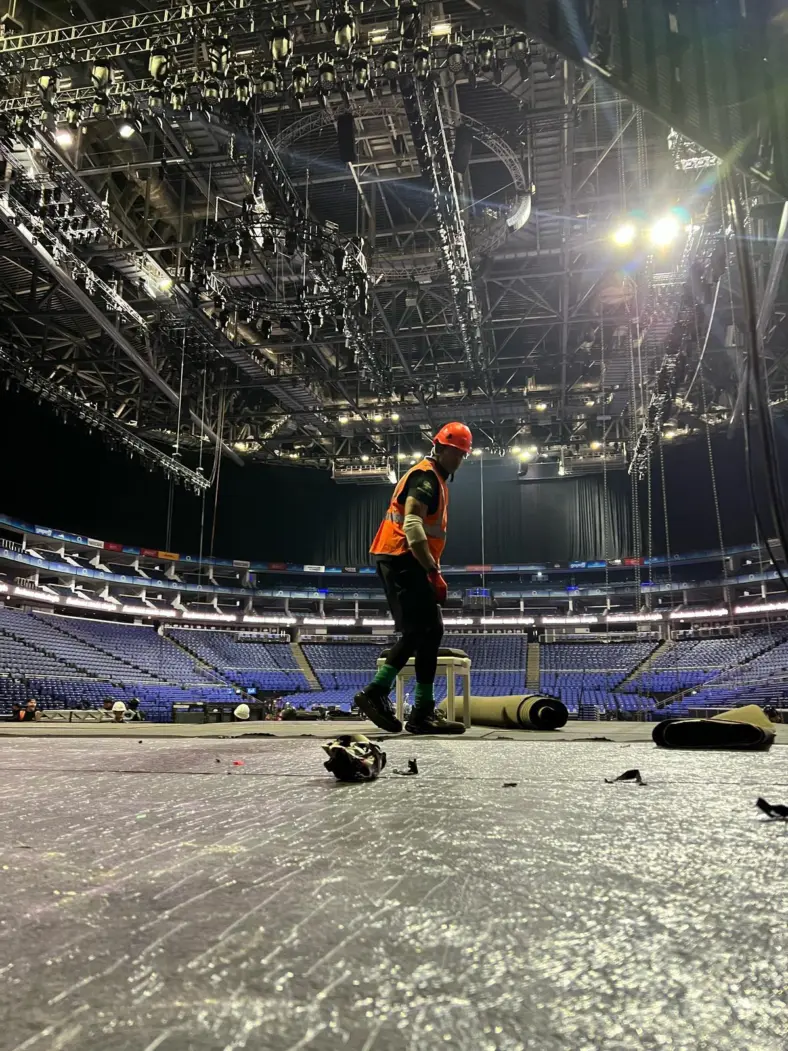
At the end of the event, everything needs to be taken down, packed up, and put away. An efficient strike strategy is often required to meet strict venue turnaround times, particularly in large venues that may host a completely different event - with a different team - the next day, or even the same day. Waste management is essential during this stage. Teams should always ensure the venue or site is left exactly as it was found, with no rubbish or materials left behind. All equipment must be returned to its required place, whether on site or off site, ensuring everything is properly accounted for and stored. Post event reporting and feedback loops are also important, allowing teams to review performance, identify areas for improvement, and refine processes for future events.
Key Challenges of Large Venue Production
Large event venues like The O2 typically operate under strict time pressures and fixed access windows. All teams and equipment must be off site by a specific time, with no overruns, as this could directly impact other events scheduled at the venue. At this scale, multiple parties are usually involved. This includes the venue team, onsite crew and security, as well as the event client and their wider network of teams and contractors. These can range from general event crew and technical crew to hair and makeup, set design, and of course talent and guests. While this is typical for most events, the scale is significantly larger in venues of this size. Venues like this also come with high technical demands and strict safety expectations. Because of this, the importance of experienced and adaptable crew cannot be overstated - they are essential to ensuring everything runs smoothly, safely, and on schedule.
What Makes it Work
One of the most important factors in large event venues is communication. Due to the scale of the space, teams are physically further apart, making clear and consistent communication essential. Walkie-talkies are a standard tool on site, along with regular check-ins between departments. At smaller venues, it’s often possible to see what other teams are doing or spot if someone needs assistance simply by looking across the room. In larger venues, that visibility is lost, meaning teams need to be far more proactive in how they communicate and coordinate with one another. It is also essential to have a skilled and well briefed crew with experience working in large scale environments. Strong leadership on site plays a key role in managing responsibilities, solving problems quickly, and maintaining consistent communication across all teams. To successfully deliver events at venues like The O2, excellent preparation is key - but so is the ability to remain flexible and adapt on the day when needed.
If you need experienced crew for large venue events, get in touch.