Planning an Event Timeline: When Should You Book Security, Crew & Technical Support?
Most event problems don't start on the day. They start weeks earlier, when security, crew or technical support is booked too late and the best teams are already committed elsewhere. Knowing when to book each part of your event team makes everything that follows easier: better availability, clearer planning and fewer surprises on site. Here's a practical guide to building your event timeline.
Getting the order right
Security, crew and technical support all depend on each other. Your technical production shapes how many crew you need and when. Your crew numbers shape call times and shift patterns. Your security plan often feeds into venue requirements, licensing and risk assessments. Book them in the right order and each decision builds on the last. Book them out of sync and you end up reworking plans, chasing availability and paying more for last minute cover.
How far ahead should you book?
The right lead time depends on the scale of your event. As a general guide:
- Standard events: at least 2 to 4 weeks
- Larger or more complex productions: 1 to 2 months
- Major international events: 2 months or more
The earlier you book, the more choice you have over the team that turns up.
Start with your technical requirements
Your technical production is the foundation everything else is built around. AV, staging, lighting and rigging decisions determine how long your build takes, how many hands you need and when they need to be on site. Get your technical spec confirmed as early as you can. The sooner it's locked in, the sooner your crew and security requirements can be scoped properly.
2 months or more: major and international events
For large scale, multi-day or international events, aim to book security and crew at least two months ahead. These events need more people, more coordination and more time to arrange the practical details, from travel and accommodation to accreditation and site access. Peak season dates book up quickly too, so if your event falls during a busy period for the industry, earlier is always better.
1 to 2 months: larger or more complex productions
For bigger builds, multiple stages or tight turnarounds, 1 to 2 months gives time for proper planning and resource allocation. That means:
- The right mix of crew for load-in, build, show and de-rig
- Any specialist roles your event needs
- A security plan matched to your venue, audience and timings
2 to 4 weeks: standard bookings
For smaller or more straightforward events, aim to book at least 2 to 4 weeks ahead. This gives your provider time to put the right team together and gives you time to confirm the details without a last minute rush.
The final week: confirm and brief
With your team booked, the final days are about making sure everyone knows the plan:
- Final crew and security numbers, call times and shift patterns
- Site inductions, PPE and health and safety briefings
- Security deployment confirmed with the venue
- Contact sheets and clear on-site points of contact
- A contingency plan for changes to schedule or scope
What happens when you book too late
Leave it late and your options narrow quickly. Experienced crew and security staff get booked up, especially in peak season. Costs can rise, there's less time to brief teams properly and more pressure falls on the build. A little extra lead time is the simplest way to protect your event.
Quick-reference booking timeline
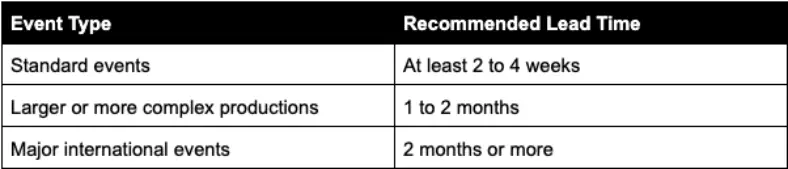
Confirm your technical requirements first, so crew and security can be planned around them.
Security and crew from one provider
Alpha Crew provides both event crew and security in-house. Booking both through one team means one point of contact, joined up scheduling and teams that are briefed together, so nothing falls through the gaps.
Ready to plan your event?
Get in touch with Alpha Crew to talk through your security and crew requirements. The earlier we hear from you, the more we can help.