The Role of Equipment Transport in Event Production
Event production involves a lot of moving parts, both literally and figuratively. From staging and lighting to sound systems and temporary structures, every element must come together at exactly the right moment. Among these many components, equipment transport is a critical but often overlooked factor in an event's success. Effective equipment transport ensures essential kit arrives safely, on schedule, and ready for use. In this blog we’ll delve into the role a bit deeper.
Why Equipment Transport is Important
Every event requires a wide range of equipment, and no two events are exactly the same. A concert may require staging, barriers, lighting rigs, sound systems and props, while a sporting event may need specialist equipment, temporary infrastructure and spectator facilities. Regardless of the type of event, all equipment must arrive on site safely and on schedule to ensure preparations can begin as planned. When equipment transport is disrupted, the impact can be significant. Delays can affect build schedules, increase costs, and put pressure on event teams working to meet strict deadlines. In some cases, transportation issues can create a domino effect, causing delays throughout the setup process and potentially impacting the overall delivery of the event. For this reason, reliable equipment transport is a fundamental part of event production, helping organisers keep projects on track and ensuring everything is in place when it's needed.
Supporting Efficient Event Set-Up
To effectively support event set-up, delivery teams need to coordinate closely with all the relevant players to ensure build schedules are aligned. An organised transport plan helps crews work more efficiently during installation, ensuring equipment arrives in the correct order and at the right time. This approach also minimises downtime and prevents bottlenecks on site, allowing different teams to work in parallel without unnecessary delays. As a result, the overall setup process becomes smoother, faster, and more controlled.
Protecting Valuable Event Equipment
For many events, the equipment involved can be expensive, fragile, or highly specialised. This brings a unique set of challenges when it comes to transport, particularly when handling high value or sensitive items. In these cases, specialist transport methods are often required, alongside secure loading and unloading procedures to ensure equipment is properly protected throughout its journey. There is always a risk of damage during transit or handling, which must be carefully mitigated through correct planning and execution. This is where experienced, skilled, and qualified teams play a vital role, ensuring equipment is treated with care and arrives on site in perfect condition, ready for use.
Managing Logistics Across Multiple Locations
Transport requirements become more complex for touring productions, roadshows, festivals, and multi venue events, where equipment is constantly moving across different locations and distances. Each venue may also present its own restrictions, access limitations, or logistical challenges that must be carefully planned for in advance. Coordinating equipment movement between these sites is essential to ensure smooth transitions and uninterrupted event delivery. This requires clear scheduling, strong communication, and precise execution from all teams involved. Maintaining consistency and reliability across these complex event schedules is key, ensuring that every location receives the right equipment, in the right condition, at the right time.
The Importance of Timing and Scheduling
Transport teams need to work within strict event deadlines and venue access windows. Careful planning of routes, delivery times and collection schedules is essential to keep everything running on time. Contingency planning is also key, helping teams prepare for potential disruptions such as traffic, weather conditions, or last minute changes. This proactive approach helps reduce delays and keeps event delivery on track.
Sustainability Considerations in Equipment Transport
There is an increasing focus on environmentally responsible event logistics. Route optimisation and efficient vehicle usage play a vital role in reducing carbon emissions across event operations. There are also clear benefits to using local crews and regional transport networks, helping to minimise travel distances and further reduce environmental impact.
How Transport and Event Crews Work Together
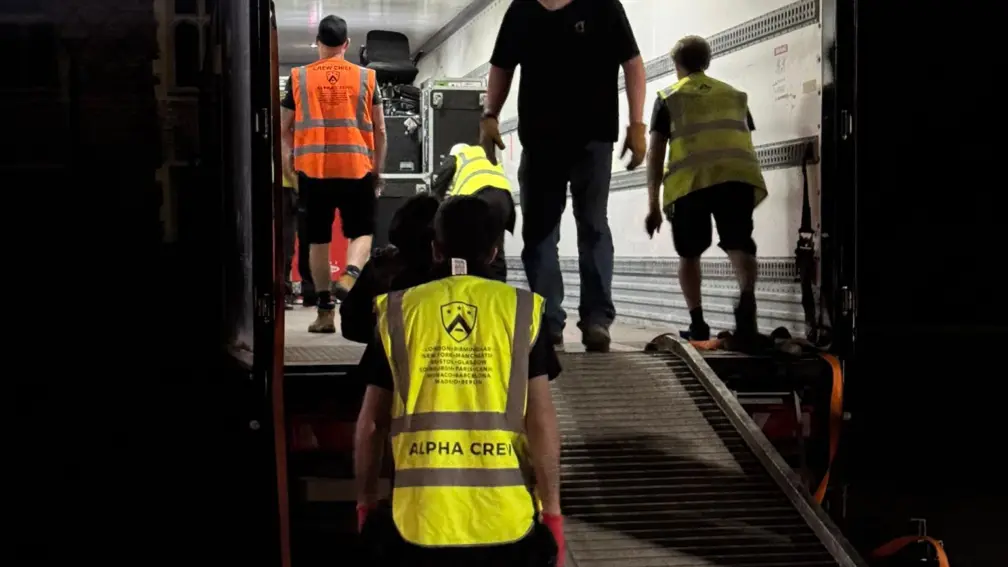
Collaboration between transport providers, production managers and event crews is essential to ensure smooth delivery across all stages of production. Efficient loading, unloading and on site positioning by crews helps streamline the entire process. Clear and consistent communication between all parties plays a crucial role in keeping projects on schedule and ensuring equipment is where it needs to be when it is needed.
Common Challenges and How they are Overcome
Transport teams can face a range of challenges, including:
- Last minute schedule changes
- Restricted venue access or urban delivery limitations
- Large or specialist equipment requiring bespoke transport solutions
To overcome these challenges, flexibility, experience and strong logistical planning are essential across all teams involved.
Alpha Crew Event Equipment Transportation
Without the transport of event equipment, an event simply cannot run. Effective transport contributes to smooth operations, equipment protection and successful event delivery, forming a fundamental part of the wider production process.
To work with Alpha Crew on your next event get in touch, or for more information visit our event equipment transportation page here.